
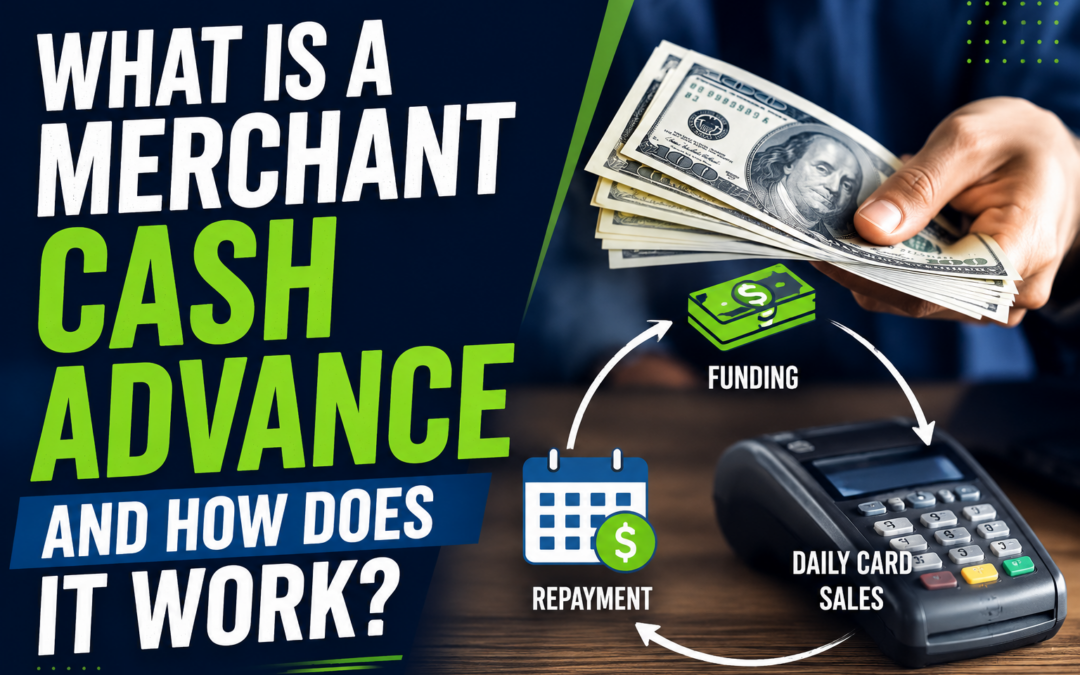
A Merchant Cash Advance, often called an MCA, can seem like a quick and convenient solution when your business needs fast access to capital. Unlike traditional loans, Merchant Cash Advances are designed to provide funding quickly, often with minimal paperwork and fast approval times. For business owners dealing with cash flow shortages, urgent expenses, payroll concerns, or unexpected operational costs, an MCA can appear to offer immediate relief.
What many business owners do not fully realize, however, is how Merchant Cash Advances actually work — and how quickly they can create financial strain if repayment terms become difficult to manage. Understanding how MCA funding is structured, how repayment is collected, and what risks may come with this type of financing is critical before accepting one. Knowing the full picture can help business owners make informed financial decisions and avoid becoming trapped in a cycle of aggressive daily withdrawals and stacked debt obligations.
Schedule Your Free Consultation
What Exactly Is a Merchant Cash Advance?
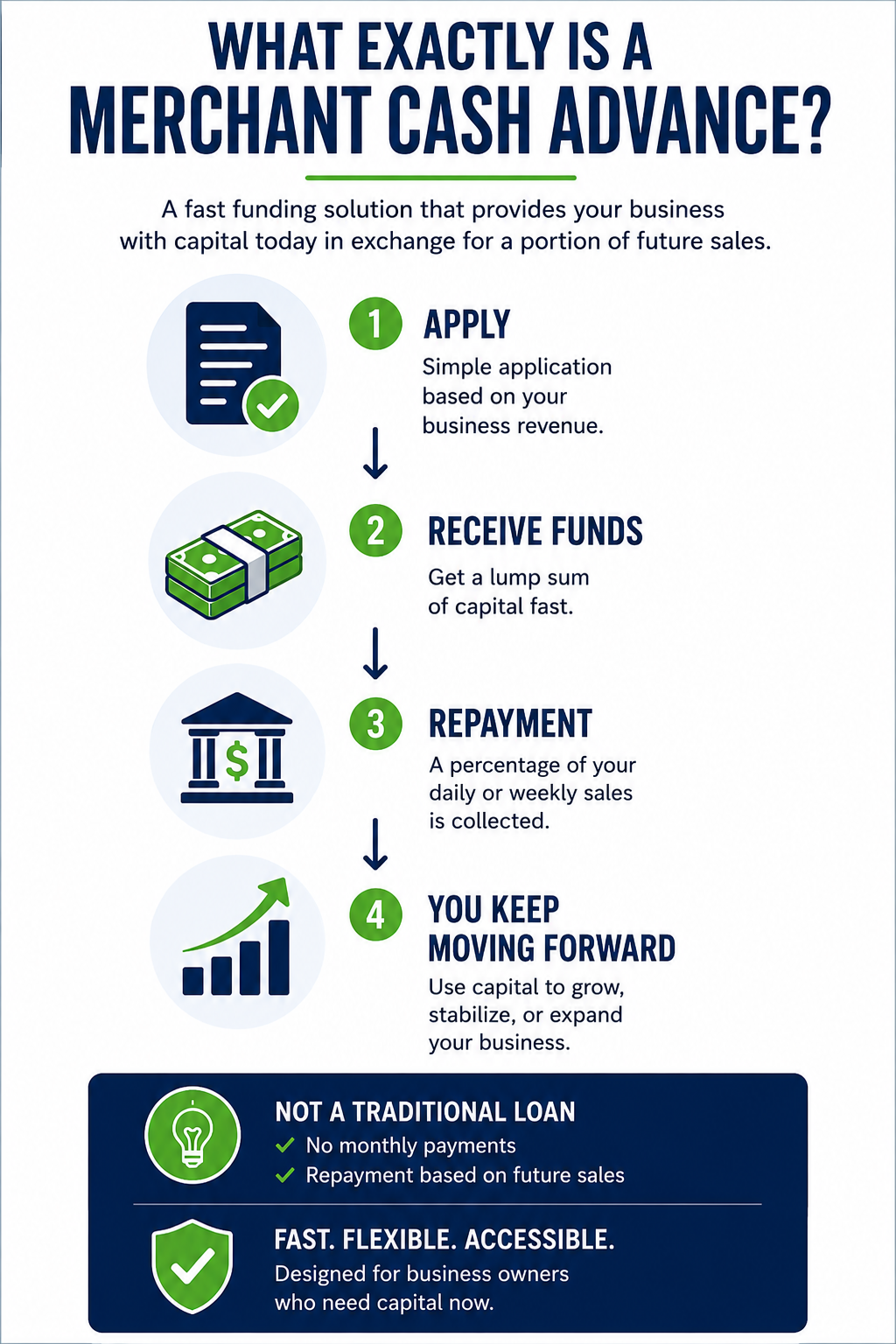
A Merchant Cash Advance is a type of business funding where a company provides your business with a lump sum of money upfront in exchange for a portion of your future sales or receivables.
Unlike a traditional business loan, this is not technically structured as a loan. Instead, it is considered a purchase of future revenue. The MCA provider gives your business immediate capital and collects repayment directly from your daily or weekly revenue until the agreed amount has been repaid.
Because approval is often based more on revenue performance than credit history, Merchant Cash Advances are commonly marketed to businesses that may not qualify for traditional bank financing.
How Does a Merchant Cash Advance Work?
The process is usually straightforward.
A business applies for funding and provides recent bank statements, revenue records, and other financial documentation. Once approved, the MCA provider advances a lump sum to the business.
Repayment is then automatically collected through one of two common methods:
- Daily or weekly ACH withdrawals directly from your business bank account
- A percentage of future credit card sales
The total amount repaid is determined using a factor rate rather than a traditional interest rate.
For example, if a business receives $50,000 with a factor rate of 1.4, the total repayment obligation becomes $70,000.
This means the business must repay the original advance plus $20,000 in fees.
How MCA Repayment Is Different From Traditional Business Loans
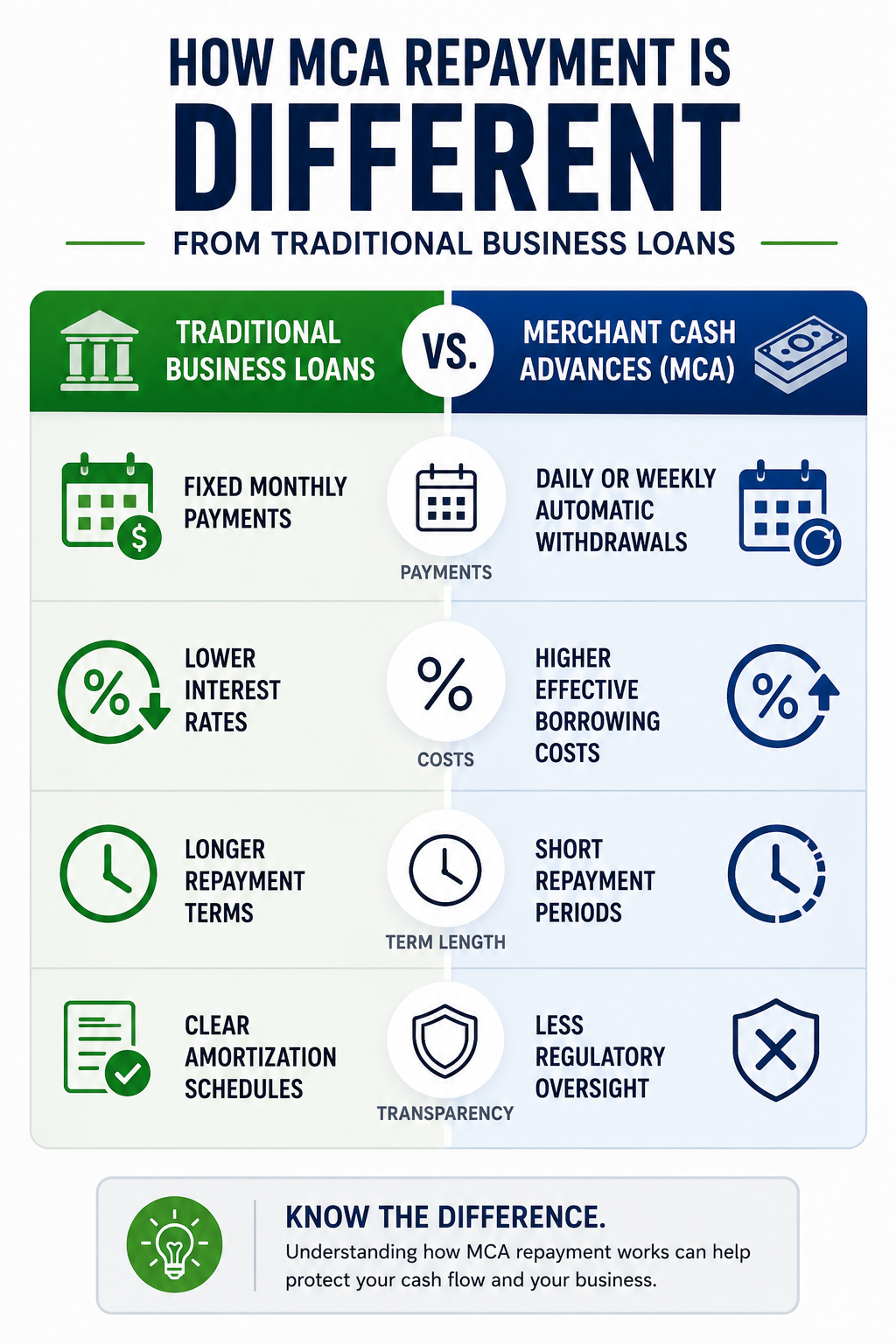
Traditional business loans generally have:
- Fixed monthly payments
- Lower interest rates
- Longer repayment terms
- Clear amortization schedules
Merchant Cash Advances often involve:
- Daily or weekly automatic withdrawals
- Higher effective borrowing costs
- Short repayment periods
- Less regulatory oversight
This structure can create significant pressure on daily cash flow, especially during slower revenue periods.
What Business Owners Use Merchant Cash Advances For
Businesses often use Merchant Cash Advances to cover:
- Payroll shortages
- Emergency operational expenses
- Inventory purchases
- Equipment repairs
- Seasonal cash flow gaps
- Expansion opportunities
While these funding needs are legitimate, the speed of MCA approval can sometimes lead business owners to accept terms without fully understanding the long-term financial impact.
The Real Cost of Merchant Cash Advances
One of the biggest misunderstandings surrounding Merchant Cash Advances is cost.
Because MCA providers use factor rates instead of APR, the true cost can be difficult to calculate at first glance.
What may appear to be a manageable repayment amount can translate into an extremely high effective annualized cost, especially when repayment occurs over a short period.
For many businesses, these aggressive repayment schedules create ongoing financial strain.
Why Merchant Cash Advances Can Become Dangerous
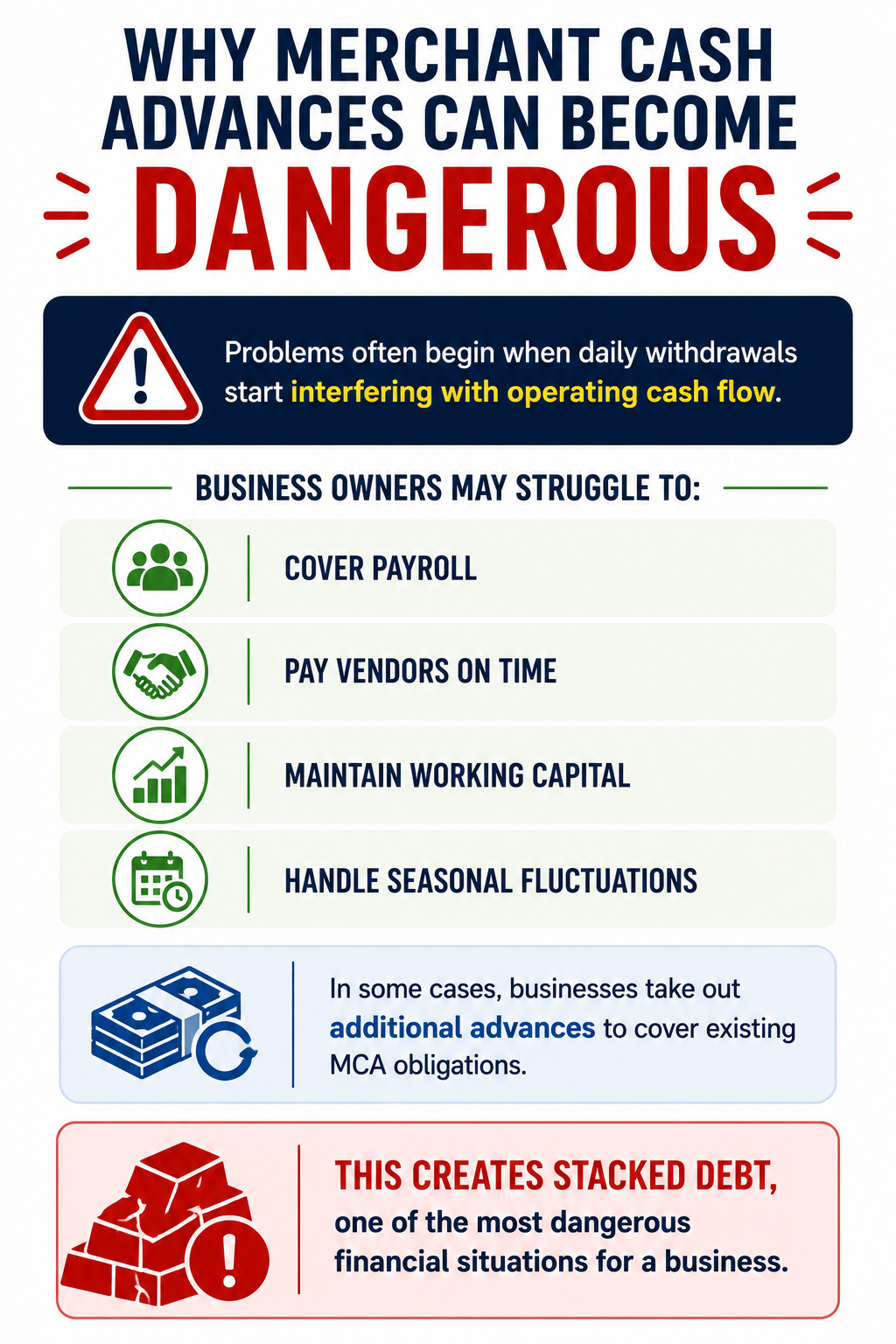
Problems often begin when daily withdrawals start interfering with operating cash flow.
Business owners may struggle to:
- Cover payroll
- Pay vendors on time
- Maintain working capital
- Handle seasonal fluctuations
In some cases, businesses take out additional advances to cover existing MCA obligations.
This creates stacked debt, one of the most dangerous financial situations for a business.
Common Merchant Cash Advance Terms You Should Understand
Important MCA terms include:
Factor Rate: Multiplier used to determine total repayment
Holdback Percentage: Portion of daily revenue collected
ACH Withdrawal: Automated daily bank account deduction
Stacking: Taking multiple MCAs simultaneously
Reconciliation Clause: Potential adjustment based on actual revenue
Understanding these terms helps business owners evaluate risk before signing an agreement.
Warning Signs Your MCA Is Hurting Cash Flow
Your Merchant Cash Advance may be becoming a problem if:
- You are constantly low on operating cash
- Payroll feels difficult to meet
- You are delaying vendor payments
- Daily withdrawals are causing overdrafts
- You are considering another MCA to stay current
These are often early indicators that relief may be necessary.
Can You Get Out of Merchant Cash Advance Debt?
Yes. Businesses facing MCA pressure often have options.
These may include:
- Debt restructuring
- Payment renegotiation
- MCA consolidation
- Settlement negotiations
- Professional relief assistance
The earlier action is taken, the more options are typically available.
When To Seek Merchant Cash Advance Relief
If your business is struggling to keep up with daily withdrawals, it may be time to explore professional relief options.
Merchant Cash Advance relief can help businesses regain control, stabilize cash flow, and create a realistic path forward.
Ignoring the problem often allows financial pressure to escalate.
Struggling With Merchant Cash Advance Payments?
If daily withdrawals are putting pressure on your business, you may have options. MCA Shield helps business owners explore practical Merchant Cash Advance relief solutions designed to restore cash flow and create a path toward financial stability.
The sooner you act, the more options may be available.

Case Study: Business Survives MCA Crisis
A merchant cash advance crisis can threaten any business, but recovery is possible. Discover how one diner owner overcame mounting MCA debt, restored cash flow, and regained financial stability through early action and a customized recovery strategy.

Complete Guide to Merchant Cash Advance Default
A merchant cash advance default can put serious pressure on your business, but it doesn’t have to be the end. Learn what causes an MCA default, what happens next, your legal and financial options, and practical steps to regain control of your cash flow and recover with confidence.
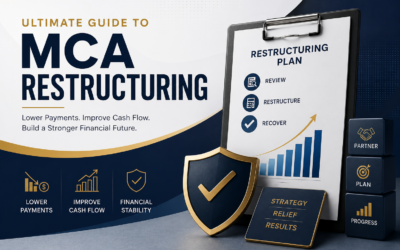
Ultimate Guide to MCA Restructuring
Discover how MCA restructuring works, when to consider it, and the steps businesses can take to reduce repayment pressure, improve cash flow, and regain financial stability.
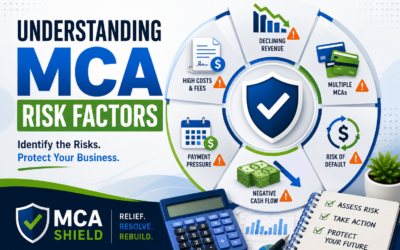
Understanding MCA Risk Factors
Understanding merchant cash advance risk factors can help you protect your business from cash flow problems, mounting debt, and financial stress. Learn the warning signs, discover practical ways to reduce MCA risk, and explore your options before financial challenges become more difficult to resolve.
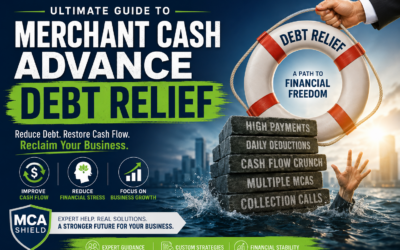
Ultimate Guide to Merchant Cash Advance Debt Relief
Overwhelmed by merchant cash advance payments? This ultimate guide to merchant cash advance debt relief explains settlement, restructuring, qualification, and practical strategies to improve cash flow, reduce financial pressure, and help your business regain long-term financial stability.

Case Study: Business Saved From Four Stacked MCAs
Discover how one business overcame four stacked merchant cash advances through a customized debt relief strategy. Learn the warning signs, practical recovery steps, and how MCA Shield helps businesses regain financial stability.
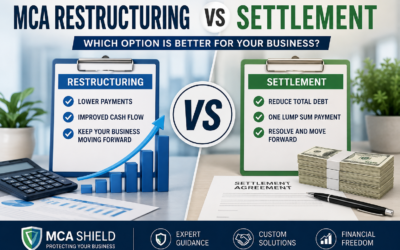
MCA Restructuring vs Settlement: Which Option Is Better?
Learn the key differences between MCA restructuring vs settlement, when each option makes sense, and how to choose the best path toward lasting financial relief.
MCA Debt Settlement FAQs
Learn the answers to the most common MCA debt settlement FAQs, including who qualifies, how the settlement process works, potential benefits and risks, and practical steps to help your business regain financial stability.
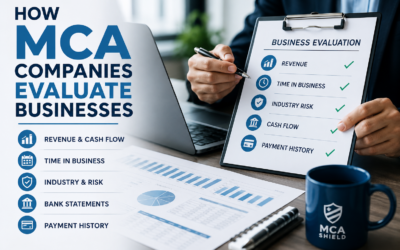
How MCA Companies Evaluate Businesses
Learn how MCA companies evaluate businesses before approval. Discover the key factors, required documents, warning signs, and how to make smarter financing decisions.
Case Study: Retailer Avoids Closure
Learn how one retailer avoided closure despite overwhelming retail business MCA debt. This case study highlights warning signs, practical recovery steps, and how MCA Shield helps businesses restore cash flow and protect their future.